Soft-phone Notes
Prototyped a transfer call notes feature for a softphone, enabling smoother agent handoffs and adoption across 500+ contact center agents.

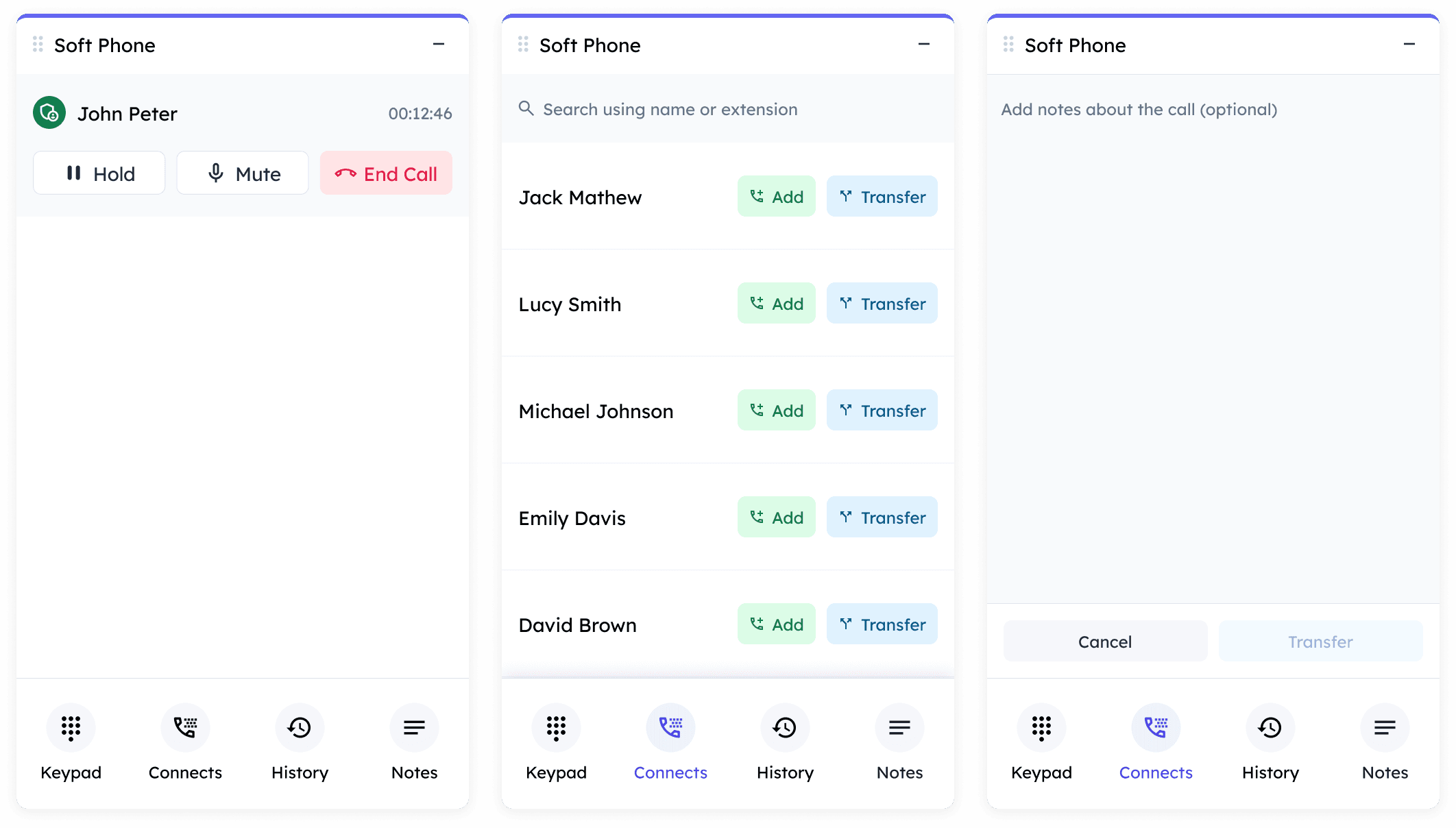
Focus
User-flows, Prototyping, UI Design
Team
1 Project manager, 3 Engineers, Designer (me )
Client
One of the leading Airline Carriers in North America
Impact
Reduced repeated explanations and improved continuity of calls.
Context:
An Opportunity to Boost Efficiency
Contact center agents regularly transfer calls to route customers to the right specialist. Although the system supported cold and warm transfers, agents couldn’t pass context during cold transfers. This often forced customers to repeat their issue. The goal was to enable quick context sharing without disrupting the call workflow.
Problem:
Pain Points & Workflow Gaps
Customers were often transferred between agents for better service, but the existing process forced them to repeat their issue. Warm transfers were possible but cumbersome, slowing down agents and wasting time.
01
Call Transfers
Customers were often transferred between agents to get better service, creating points where information could be lost.
02
Lack of Context
Receiving agents had no visibility into the previous conversation, forcing customers to repeat their issue.
03
Cumbersome Warm Transfers
While warm transfers existed, the process was slow and disrupted agents’ workflow, wasting time.
So, how might we improve the call transfer process so customer context is passed seamlessly between agents?
Design Opportunity:
Understanding Call Transfer Workflows
Before designing the feature, I first needed to understand how call transfer workflows function in a contact center. As this was my first project in this domain, I partnered with the product owner to learn how the system operated and how agents handled transfers.
01
Warm Transfer Flow
Active Call -> Initiate warm transfer -> Call receiving agent -> Agent explains customer issue -> Agent transfers the call
02
Cold Transfer Flow
Active Call -> Transfer initiated -> Select agent / queue -> Call transferred -> Receiving agent answers the call -> Customer repeats the issue
There exists an opportunity to introduce notes in cold transfer process between agent 1 and receiving agent so that customer doesn't get frustrated in the process.
Solution:
Thinking through User-flows & Interfaces
Enable agents to quickly pass essential customer context during call transfers without disrupting their workflow.

User-flow: Agent Initiating Transfer
Agent Transferring Call
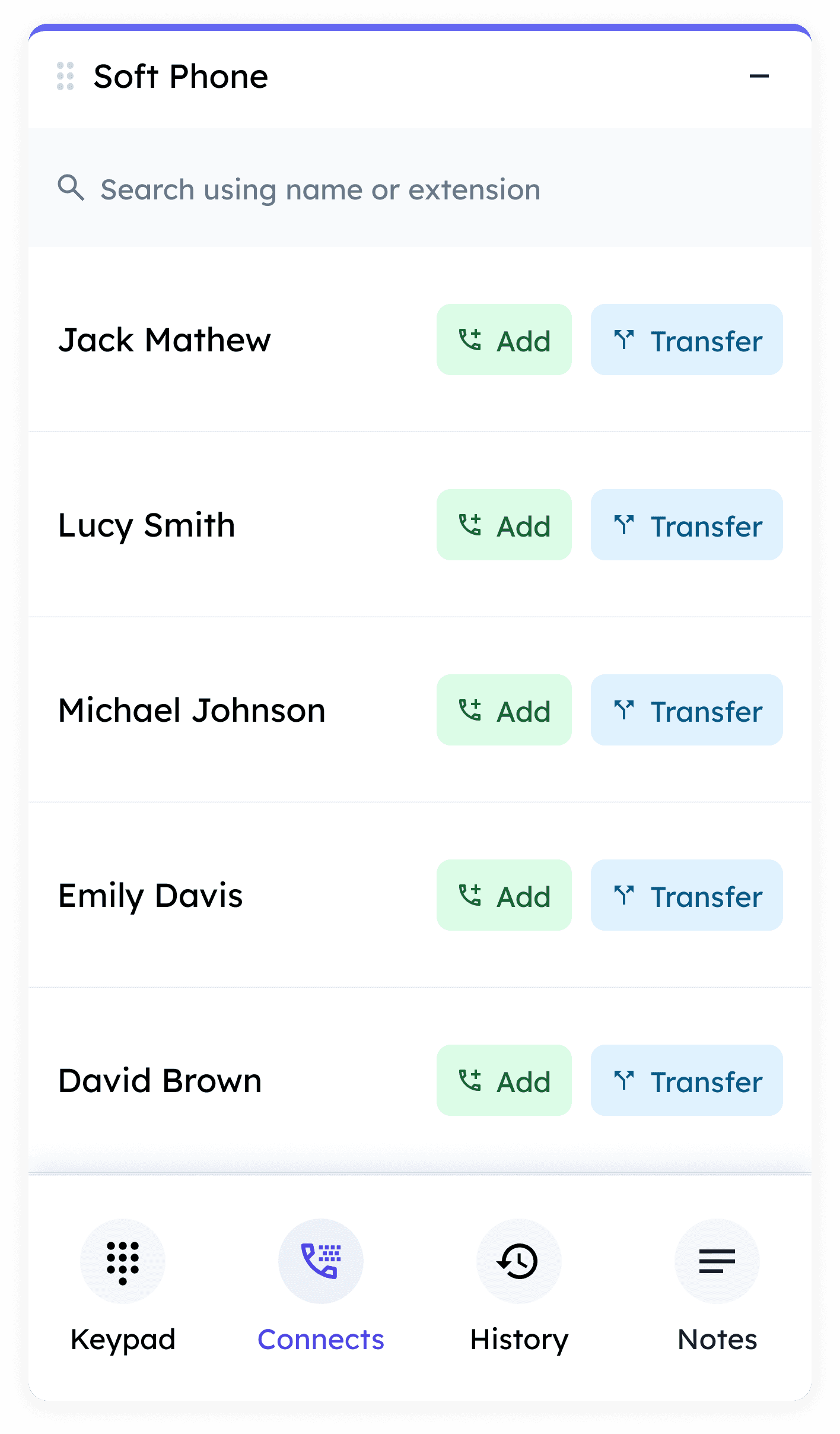
User navigates to connects & clicks transfer button
Agent Receiving Call
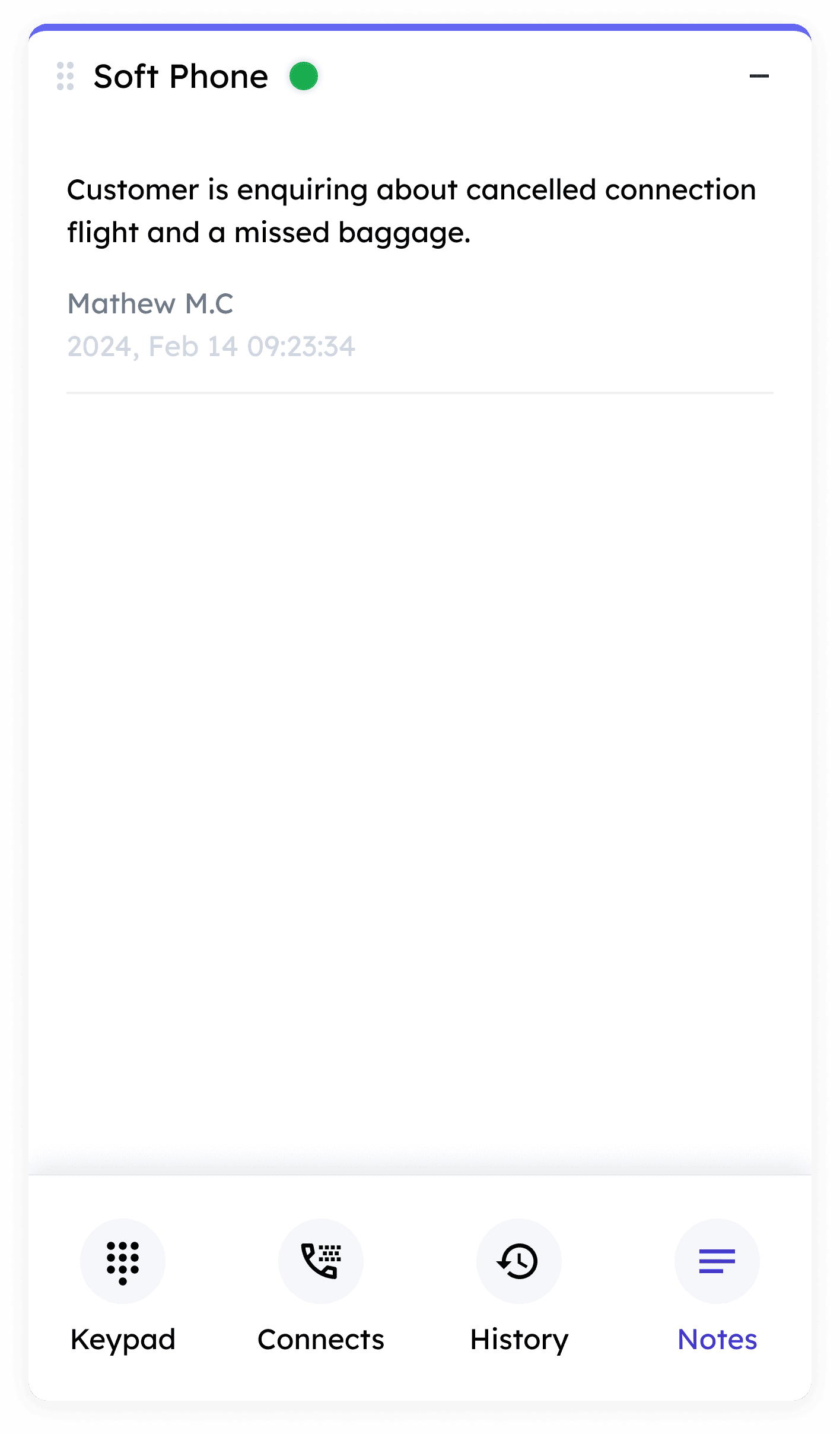
Single Note
Thoughtful Iterations
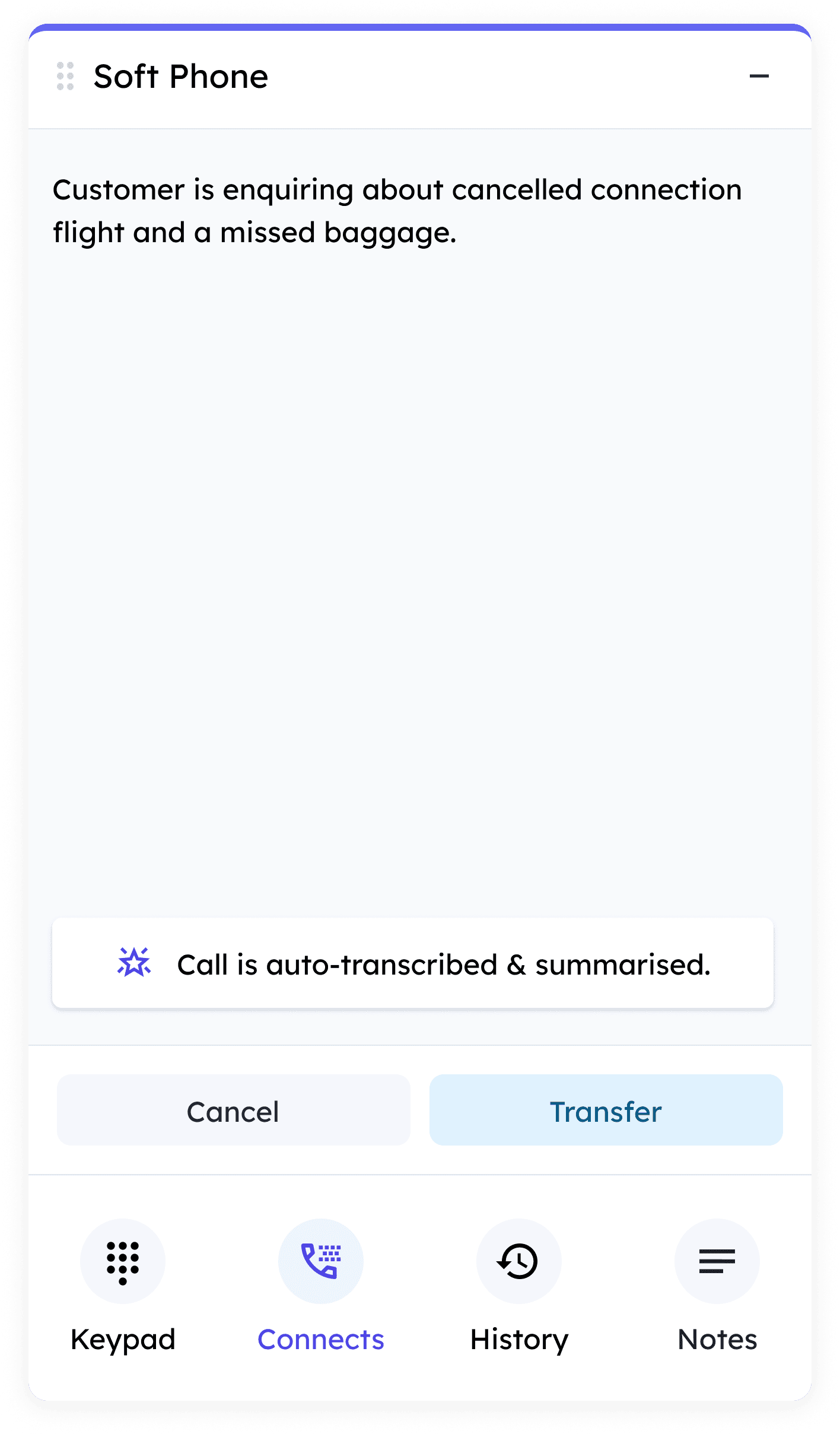
Typing Notes: Idea 1
Impact
Enabled agents to transfer calls with context, reducing the need for customers to repeat their issue. This improved continuity between agents and helped resolve customer requests more efficiently.
Reflection
Understanding the system before designing
This project taught me the importance of first understanding the operational workflow before proposing solutions. By collaborating with the product owner, I was able to map the existing call transfer process and identify where context was being lost.
No matter how small the feature request is, the underlying technology/workflow can be very complex and understanding this complexity positions me in right seat for future support.
Thinking beyond the immediate solution
While designing the feature, I also explored opportunities such as AI-powered call transcription to automatically generate transfer notes. Although this wasn’t feasible at the time, it highlighted potential future improvements.
Always ask for help, it's okay
This project reinforced that in ambiguous environments, staying silent doesn’t lead to learning. By actively seeking guidance from the product owner, I was able to quickly understand the call transfer ecosystem, clarify workflow gaps, and identify opportunities to improve the process. Asking for help wasn’t a shortcut — it was the most effective way to learn the system and make informed design decisions.
Thanks for Reading!
Thanks for following along!